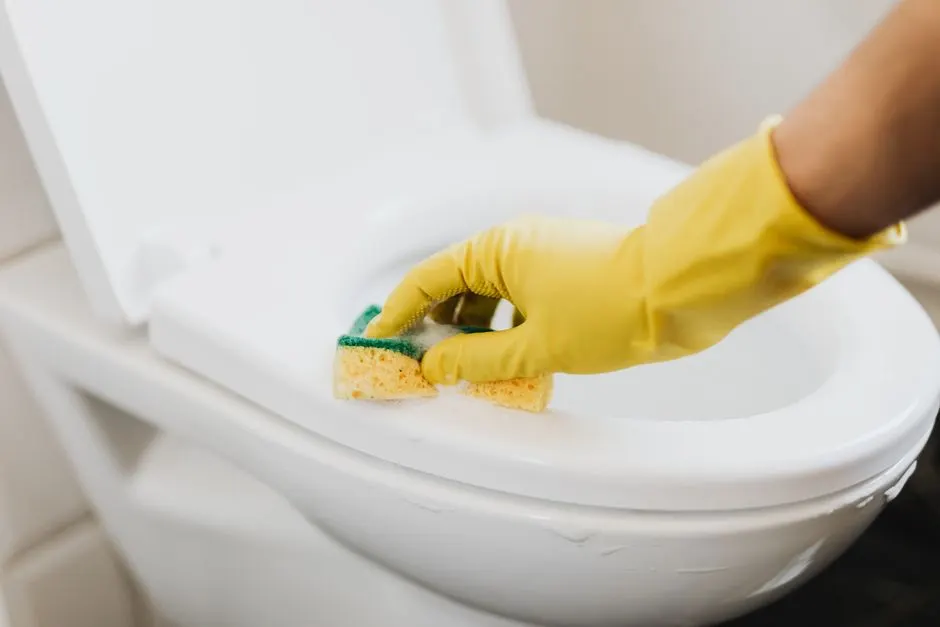
Cleaning up a toilet overflow without damaging floors means stopping the water supply within the first 60 seconds, extracting every ounce of standing water, and drying the subfloor before it swells. If you do those three things in that order, most flooring survives. Skip the drying step and you are looking at cupped hardwood, lifted vinyl seams, and a mold problem inside a week.
We handle toilet overflow water cleanup in Panorama City almost every week, and the difference between a $300 fix and a $3,000 floor replacement is almost always timing. This guide walks you through the exact sequence our technicians use, what it costs in 2026, and when the job is bigger than a mop and a fan.
Stop the water and kill the supply first
The first move is not grabbing towels, it is killing the water source. Reach behind the bowl and turn the oval shutoff valve clockwise until it stops. If the valve is frozen or missing, lift the tank lid and push the flapper down flat with your hand, or shut off the main at the side of the house.
Once the flow stops, do not flush again. A second flush dumps another 1.6 to 3.5 gallons onto a floor that is already soaked. If the bowl is clogged, leave it clogged until you have cleared the standing water, then deal with the blockage.
- Turn the supply valve clockwise until it seats.
- Push the flapper down if the valve will not budge.
- Shut the house main if neither works.
- Do not flush, plunge, or run any nearby fixture.
Water from a toilet overflow is classified as Category 3 - black water - when it comes from the bowl itself, because it carries bacteria and waste. Clean water that leaks from the tank supply line is Category 1. That distinction matters for how you clean and whether you can save the flooring underneath.
How to clean up a toilet overflow without damaging floors in Panorama City
How to clean up a toilet overflow without damaging floors in Panorama City comes down to extraction speed and airflow, not scrubbing. Water spreads under baseboards and into the subfloor within minutes, so the goal is to pull it out before it wicks sideways.
Step 1: Remove standing water in the first 15 minutes
Use a wet/dry shop vac, a carpet extractor, or every dry towel you own. Work from the outside of the puddle toward the center so you do not push water into new rooms. A wet/dry vac pulls roughly a gallon every 30 seconds, which beats towels by a wide margin.
If the overflow reached carpet, pull the carpet back from the tack strip at the nearest wall. Carpet pad acts like a sponge and holds water against the subfloor for days. Pad is cheap to replace; subfloor is not.
Step 2: Dry the subfloor, not just the surface
Surface-dry floors feel fine and rot underneath. Set up box fans and a dehumidifier aimed across the wet area, and run them for 48 to 72 hours. Air movers push 1,500 to 3,000 CFM, which is why we get floors dry in a day and a half where a household fan takes four days.
Target 12 to 15 percent moisture content in wood subfloor. You can check it with a $30 pin meter from any hardware store. If the reading is still above 16 percent after 72 hours, the water went deeper than the surface.
Step 3: Sanitize anything the bowl water touched
Because bowl water is Category 3, every surface it contacted needs a disinfectant rated for sewage. Mix one cup of bleach to one gallon of water, or use a quaternary ammonia cleaner. Wear gloves and ventilate the room.
Baseboards, drywall within 12 inches of the floor, and the bottom plate inside the wall cavity all need attention. If drywall is soft or crumbly, cut it out 2 inches above the water line and let the cavity dry before patching.
Step 4: Watch the flooring for the next two weeks
Damage shows up late. Hardwood cups at the edges, laminate swells at the seams, and vinyl plank lifts at the ends. Check the floor every few days for the first two weeks. If you catch cupping early, a floor sander can flatten it once the wood dries. If you wait a month, the boards are permanently deformed.
For jobs where the water sat overnight or reached a neighboring room, professional toilet overflow cleanup in Panorama City, California includes moisture mapping with thermal cameras so we know exactly where the water traveled before we start drying.
Why Panorama City floors fail faster than you expect
Panorama City homes dry slower than most of Los Angeles because of how they were built. The tract houses that went up across the San Fernando Valley in the 1950s and 1960s used slab-on-grade construction with hardwood nailed directly over a thin plywood subfloor. There is no crawl space to vent moisture, so water that gets under the floor has nowhere to go.
Summertime makes it worse in a different way. When it is 98 degrees outside and the AC is running, indoor relative humidity drops to 25 or 30 percent. Wood dries fast on the surface and cracks at the seams before the moisture underneath has moved. That is why we see more cupped floors in September than in February.
Older galvanized supply lines in these homes are also a factor. A 60-year-old toilet supply line can fail at the ferrule with no warning, which is why we recommend replacing the line every 10 years. For homeowners dealing with that kind of hidden failure, water leak restoration in Panorama City, California covers the detection and repair side before the floor work begins.
Neighboring areas see the same pattern. We get calls from Water Damage Restoration in North Hills and Water Damage Restoration in Van Nuys for identical mid-century slab construction, and the drying timelines are nearly the same.
What to watch out for
The most common mistake we see is treating a toilet overflow like a spill. A spill is surface water. An overflow is water that has already moved under the flooring, into the wall cavity, and sometimes through the ceiling of the room below.
- Do not use a household fan alone. It moves air but does not remove moisture from the air, so the room stays humid and the subfloor stays wet.
- Do not skip the subfloor. If you only dry the top surface, mold starts growing underneath within 24 to 48 hours.
- Do not use a regular vacuum. A shop vac is built for water; a household vacuum will short out and can shock you.
- Do not ignore the smell. A musty odor two days later means microbial growth has started and you need more than a fan.
- Do not assume renters insurance covers it. Most renters policies cover personal property, not the landlord's floor.
One more: never pour bleach directly onto hardwood. It strips the finish and leaves a white stain that no amount of sanding fully removes. Dilute it, and only use it on tile, grout, and baseboards.
When to call a professional
Call a professional when the water ran for more than 15 minutes, when it reached a second room, or when the overflow came from a clogged main line rather than a single toilet. Those three situations almost always mean water is under the floor or inside a wall.
We also get called when the toilet itself is the problem, not just the water. A running toilet that will not shut off, a wax ring that failed, or a flange that cracked all need a plumber before the drying starts. Our team at Water Damage Restoration Panorama City handles the water side and coordinates the plumbing repair so you are not juggling two contractors.
Signs you should stop and call us today:
- Water is still seeping from under the baseboard.
- The floor feels spongy when you walk on it.
- You can smell sewage, not just moisture.
- The ceiling below the bathroom shows a stain.
- Moisture meter reads above 16 percent after 72 hours of drying.
We handle emergency water removal in Panorama City, California around the clock, and we can usually be on site within the hour for active overflows.
Frequently Asked Questions
How do I clean up a toilet overflow without damaging floors in Panorama City?
Shut off the supply valve, extract all standing water with a wet/dry vac, then run fans and a dehumidifier for 48 to 72 hours. Sanitize anything the bowl water touched. Check the moisture content of the subfloor before you put furniture back.
Can toilet overflow ruin hardwood floors in Panorama City California?
Yes. Hardwood starts cupping within 24 hours of standing water exposure, and slab-on-grade homes common in Panorama City have no crawl space to vent moisture. Boards that stay wet past 72 hours usually need replacement, not just sanding.
Who cleans up toilet overflow near me in Panorama City?
Water Damage Restoration Panorama City handles toilet overflow cleanup, water extraction, and floor drying across Panorama City and the surrounding San Fernando Valley. We respond 24 hours a day for active overflows.
How much does toilet overflow floor repair cost in Panorama City?
Typical 2026 pricing runs $250 to $600 for cleanup and drying on a small bathroom, $800 to $2,000 if subfloor or drywall needs repair, and $2,500 to $6,000 if hardwood or tile has to be replaced across a larger area.
Does insurance cover toilet overflow floor damage in Panorama City?
Most homeowners policies cover sudden accidental discharge, which includes a toilet overflow, minus your deductible. Damage from a slow leak you ignored for months is usually excluded. We document the loss with photos and moisture readings to support your claim.
Get help with Water Damage Restoration in Panorama City
If the water is still moving or the floor already feels soft, stop reading and call us. We will extract the water, dry the structure, and tell you straight whether the floor can be saved or needs to come up.
Call Water Damage Restoration Panorama City at (833) 321-7153 for 24-hour toilet overflow cleanup and floor drying in Panorama City and across the San Fernando Valley.